Key Takeaways
Introduction:
If your organization has locations in Canada and the U.S., you already know what it’s like to manage wage compliance across two different systems. One system for for your American locations, a spreadsheet or PDF for your Canadian ones, and a recurring task on someone’s calendar to check whether anything changed.
That’s the problem GovDocs Minimum Wage solves.
As of June 2026, all Canadian provinces and territories are available in the GovDocs Minimum Wage solution. If you’re an existing customer, this expands what you already use. If you’re evaluating GovDocs, it means you no longer have to choose between a U.S.-only solution and building something in-house for Canada.
What’s Now Available in GovDocs Minimum Wage
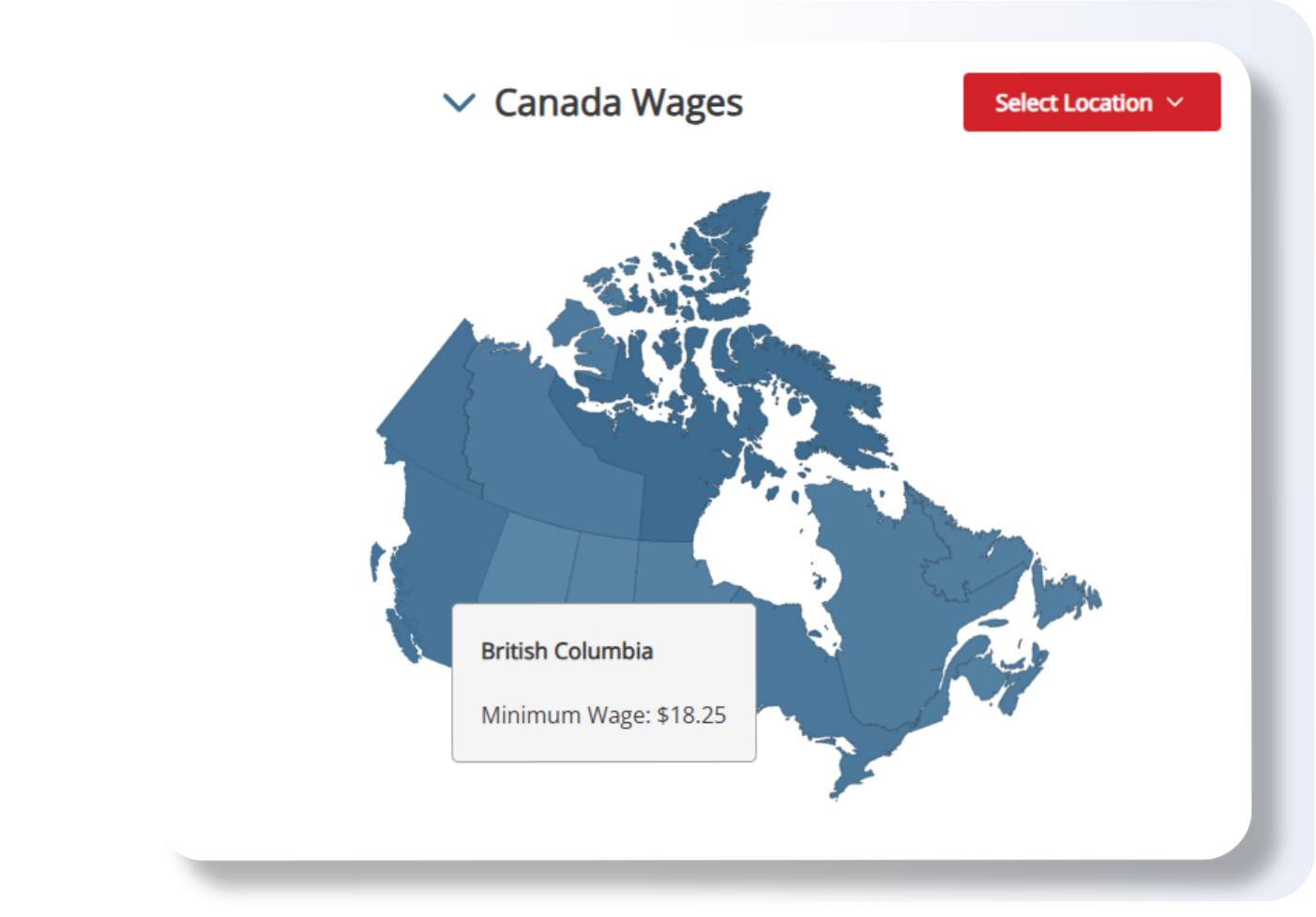
Every Canadian province and territory is now included:
- All 10 provinces: Ontario, British Columbia, Alberta, Quebec, Manitoba, Saskatchewan, Nova Scotia, New Brunswick, Newfoundland and Labrador, Prince Edward Island
- All 3 territories: Yukon, Northwest Territories, Nunavut
- Quebec tipped wage: Quebec is the only Canadian province with a legislated tipped minimum wage rate, and that field is populated for Quebec locations
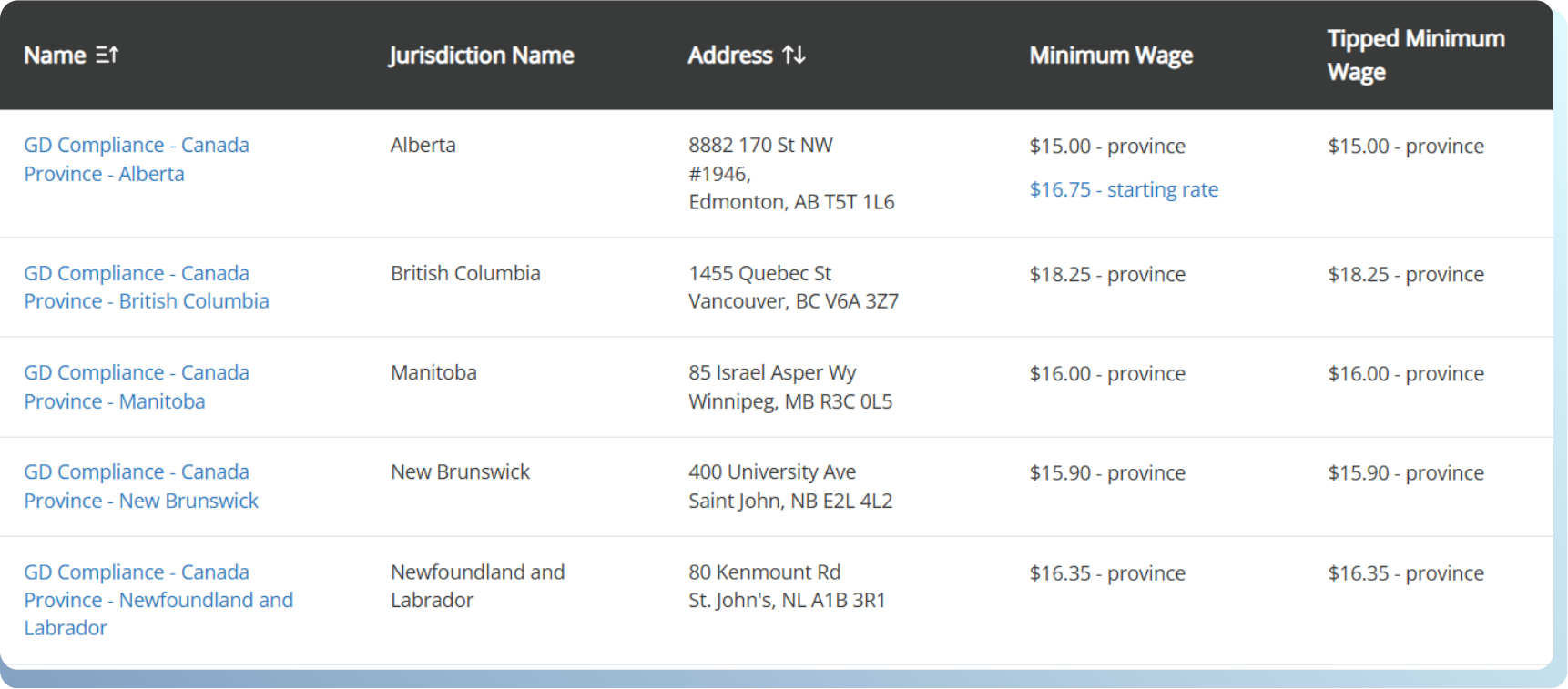
Once Canadian locations are added to your account, your team gets the same experience you rely on for U.S. compliance: live rates in the dashboard, proactive notifications when rates are set to change, and exportable data for reporting and audits.
Why This Matters for Multi-Location Employers
Each province and territory sets its own rate, and those rates update on different schedules throughout the year. October is one of the larger update windows, with several provinces adjusting rates in the fall.
For HR and compliance teams managing dozens or hundreds of locations across the border, staying current has traditionally meant:
- Monitoring provincial government websites manually
- Maintaining a separate spreadsheet or document for Canadian rates
- Relying on a static resource that may be out of date between updates
None of those approaches scale well, and none of them give you proactive notice before a rate changes.
GovDocs Minimum Wage changes that model. Your Canadian locations sit alongside your U.S. locations in the same dashboard. When a provincial rate is set to change, your team gets notified the same way you would for any U.S. jurisdiction. No extra tools. No manual monitoring. No catching up after the fact.
What It Looks Like in Practice
A few scenarios where this makes a real difference:
The multi-state, multi-province employer. Your organization has locations in Ontario, Alberta, and ten U.S. states. Previously, your U.S. locations were tracked in GovDocs and your Canadian locations lived in a separate process. Now they’re all in one place, visible in one dashboard, and covered by the same notification system.
The HR team preparing for October. Several provinces update minimum wage rates in October. With Canadian locations added to your GovDocs account before the fall, your team gets advance notice of upcoming changes instead of discovering them after the effective date.
The compliance administrator building a report. You need to pull a full location list, including Canadian sites, for an internal audit or board presentation. With GovDocs, that’s one export, not two separate data pulls stitched together in a spreadsheet.
How to Get Started
Canadian minimum wage is available to all GovDocs Minimum Wage customers. Adding Canadian locations to your account is handled through your Customer Success Manager as part of a location add-on, and it’s worth getting set up before October’s provincial updates take effect.
If you’re not yet a GovDocs customer and your organization operates in Canada, this is a good time to see what the platform covers.
GOVDOCS EMPLOYMENT LAW & COMPLIANCE TEAM
Backed by Experts Supporting 34% of the Fortune 50
Dana
Holle
Counsel & Manager, Employment Law & Compliance
Erin
Oberdorfer
Principal
Research Analyst
Kathleen McCarthy
Senior
Compliance Paralegal
Grant
Larson
Compliance
Paralegal
Christina
Everling
Attorney
Canadian Minimum Wage Common Questions
Managing minimum wage compliance across Canadian provinces and territories can be complex for multi-location employers. These FAQs cover key topics for organizations tracking Canadian rates alongside U.S. compliance.
Do I need a separate product to add the Canadian minimum wage?
No. Canadian Minimum Wage is part of your GovDocs Minimum Wage subscription. If your organization is evaluating GovDocs for U.S. compliance, Canadian provinces and territories are included in the same solution, no separate dashboard required.
Which Canadian provinces and territories are covered?
All 10 provinces and all 3 territories are included in the platform. Rates and location details are maintained by the GovDocs Compliance team and sourced directly from official provincial and territorial legislation.
How do the Canadian minimum wage rates get added into the platform?
The GovDocs Compliance team maintains Canadian rate data, pulling from official provincial and territorial laws, regulations, and government publications. Your team doesn't chase the source material. When a rate changes, the platform updates and your team gets notified ahead of the effective date.
How often do Canadian rates change?
It varies by province and territory. Many update annually, with common windows in April, May, September, and October. Several provinces also tie increases to an annual adjustment formula based on inflation or the Consumer Price Index. Once your locations are added, you receive notifications before each change takes effect.
Does the platform include more than just the minimum wage rate?
Yes. Each Canadian location’s detail page includes overtime rate requirements, covered employee and employer definitions, recordkeeping requirements, and pay transparency or salary history ban information where applicable by province. Quebec is the only province with a tipped minimum wage, and that rate is included as well.
Is Canadian federal minimum wage included?
Canadian Federal minimum wage applies to federally regulated industries and is not part of provincial or territorial law. It is not included as a tracked jurisdiction, but each province's location detail page includes context around the federal minimum wage for reference. Organizations in federally regulated industries should track federal rates separately.
Will Canadian location data update automatically?
Yes. Rate data is maintained by the GovDocs Compliance team. When a provincial rate changes, your dashboard updates and your team receives advance notification through the same system used for U.S. locations.
How do I get Canadian locations added to the platform?
Adding Canadian locations is handled through a location add-on with your Customer Success Manager. If you’re not yet a GovDocs customer, a demo is a good place to start.
Is there a deadline to get set up?
No hard deadline, but timing matters practically. Several provinces update minimum wage rates in October. Getting locations added before the fall means your team receives notifications ahead of those changes rather than learning about them after the fact.

See Canadian Minimum Wage in the GovDocs Platform
One dashboard for U.S. and Canadian minimum wage, with proactive notifications, jurisdiction-level detail, and data pulled directly from official sources.
Request InfoFrequently Asked Questions
Do I need a separate product to track Canadian minimum wage?
No. Canadian minimum wage is part of the GovDocs Minimum Wage solution. If your organization is evaluating GovDocs for U.S. compliance, Canadian provinces and territories are included in the same solution, no separate dashboard required.
Which Canadian provinces and territories are covered?
All of them. All 10 provinces and all 3 territories are included in the platform. Rates and location details are maintained by the GovDocs Compliance team and sourced directly from official provincial and territorial legislation.
How do Canadian minimum wage rates get into the platform?
The GovDocs Compliance team maintains Canadian rate data, pulling from official provincial and territorial laws, regulations, and government publications. Your team doesn’t chase the source material. When a rate changes, the platform updates and your team gets notified ahead of the effective date.
How often do Canadian rates change?
It varies by province and territory. Many update annually, with common windows in April, May, September, and October. Several provinces also tie increases to an annual adjustment formula based on inflation or the Consumer Price Index. Once your locations are added, you receive notifications before each change takes effect.
Does the platform include more than just the minimum wage rate?
Yes. Each Canadian location’s detail page includes overtime rate requirements, covered employee and employer definitions, recordkeeping requirements, and pay transparency or salary history ban information where applicable by province. Quebec is the only province with a tipped minimum wage, and that rate is included as well.
Is Canadian Federal minimum wage included?
Canadian Federal minimum wage applies to federally regulated industries and is not part of provincial or territorial law. It is not included as a tracked jurisdiction, but each province’s location detail page includes context around the federal minimum wage for reference. Organizations in federally regulated industries should track federal rates separately.
Will Canadian location data update automatically?
Yes. Rate data is maintained by the GovDocs Compliance team. When a provincial rate changes, your dashboard updates and your team receives advance notification through the same system used for U.S. locations.
How do I get Canadian locations added to the platform?
Adding Canadian locations is handled through a location add-on with your Customer Success Manager. If you’re not yet a GovDocs customer, a demo is a good place to start.
Is there a deadline to get set up?
No hard deadline, but timing matters practically. Several provinces update minimum wage rates in October. Getting locations added before the fall means your team receives notifications ahead of those changes rather than learning about them after the fact.