
2026 Minimum Wage Resources: What Employers Need to Know
By The GovDocs Team | November 20, 2025
Check out our new and updated resources to stay in the know on the latest in compliance.

By The GovDocs Team | November 20, 2025
Check out our new and updated resources to stay in the know on the latest in compliance.
📈 Minimum Wage Increases: State and local rates rise on Jan. 1, 2026, creating new compliance requirements for multi-location employers.
💼 Higher Exempt Salary Thresholds: Several states introduce updated salary levels that may affect employee classification and budgeting.
📝 Expanding Pay Transparency: New laws across multiple jurisdictions tighten requirements for compensation disclosures and job postings.
🧭 New Laws and Ballot Measures: Legislative changes in areas like Portland, ME; Missouri; and D.C. influence wage policy for 2026 and beyond.
As 2026 approaches, employers nationwide are preparing for significant changes to minimum wage rates, pay transparency laws, exempt salary thresholds, and more. To help HR and compliance teams stay ahead, we’ve compiled a comprehensive roundup of GovDocs’ most essential resources – including state and local minimum wage updates, insights from our latest webinar, and tools to help assess and manage your organization’s compliance risk.

State minimum wage increases in 2026 continue to reflect scheduled increases, indexing, and ongoing efforts to raise baseline pay across the U.S. Our recent blog, 2026 Minimum Wage Rates by State, breaks down the 19 state rates updating Jan. 1, 2026.
Local minimum wage updates continue to create some of the most complex compliance challenges for multi-jurisdiction employers. The City and County Minimum Wage Rate Guide provides rates for over 50 local jurisdictions updating Jan. 1, 2026.
This resource remains one of the most valuable tools for employers managing local wage obligations across complex geographic footprints.
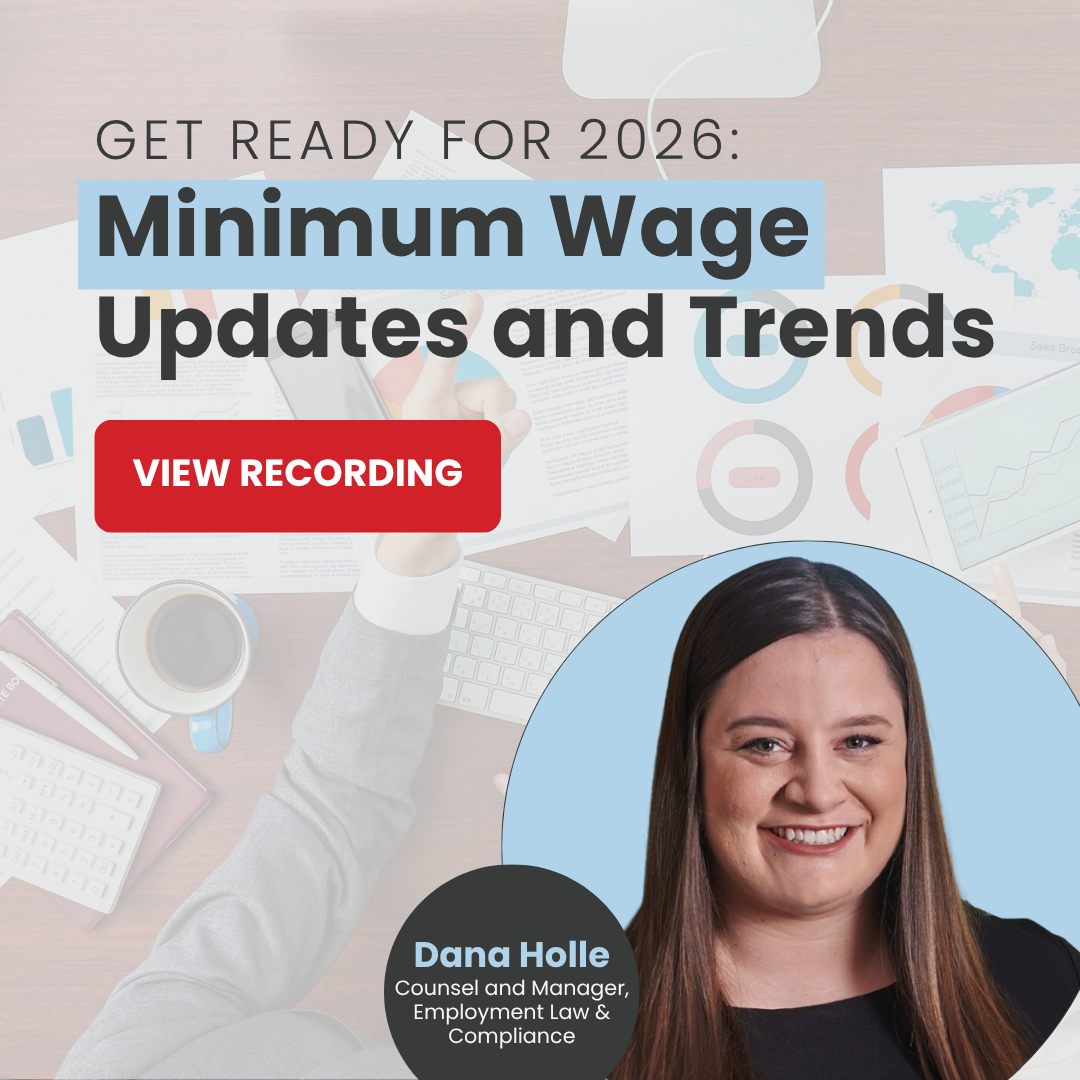
During our recent webinar, GovDocs Counsel Dana Holle walked through wage trends, Jan. 1, 2026, updates, and employer considerations for 2026. Here are a few key takeaways:
1. Exempt Salary Level Updates
Multiple states have updated or scheduled increases to exempt salary thresholds for 2026, including:
These increases may affect classification, budgeting, and internal HR processes.
2. New Pay Transparency Requirements
New laws and amendments – including updates in Massachusetts, California, Delaware, Cleveland, and Columbus – continue expanding pay transparency rules for employers with job postings or employees in these jurisdictions.
3. Minimum Wage Ballot Measures and Legislative Changes
Several new laws and ballot measures – such as updates in Portland, ME; Missouri; and the District of Columbia – are shaping wage policy for 2026 and beyond.
Bonus: Key Stats

Minimum wage compliance can be one of the most complex areas for multi-jurisdiction employers. Our Minimum Wage Compliance Risk Quiz helps organizations assess their readiness, identify gaps, and understand key risk areas related to wage updates, effective dates, tipped wage rules, and rooftop-level accuracy.
With state, city, and county minimum wage updates – plus changes to exempt salary levels, pay transparency laws, and more – employers should begin preparing now for 2026. These resources provide a comprehensive foundation for compliance as you plan for the year ahead.
Managing minimum wage requirements across states, cities, and counties can be overwhelming – especially when updates occur throughout the year. GovDocs Minimum Wage automates and centralizes the process, giving employers confidence in their wage compliance strategy.
GovDocs Minimum Wage helps organizations:

ADDITIONAL RESOURCES



 November 2025 Release Roundup