
EMPLOYMENT LAW NEWS
Webinar Recap: The Ever-Changing Landscape of Paid Leave in the Midwest
GovDocs’ recent webinar covered 2025 paid leave updates in Illinois, Michigan, Minnesota, Missouri, and Nebraska, including new laws, amendments, and compliance reminders. Key employer questions addressed topics like multi-state policies, remote workers, coordination with FMLA, and unlimited PTO compliance.
On Wednesday, Sept. 17, Jana Bjorklund, GovDocs Sr. Counsel and Director, and Dana Holle, GovDocs Counsel, teamed up in The Ever-Changing Landscape of Paid Leave in the Midwest webinar to discuss key requirements, 2025 updates, and upcoming reminders for paid leave laws in Illinois, Michigan, Minnesota, Missouri, and Nebraska. Bjorklund and Holle also focused the majority of the webinar on the paid leave questions provided directly from webinar attendees.
Illinois
Requirements – The Illinois Paid Leave for All Workers requires employers to provide 1 hour of paid leave for every 40 hours worked. There is no maximum limit to an employee’s leave balance, but employers may cap annual accrual to 40 hours. Accrued, unused paid leave must carryover annually. Frontloading is allowed if employers provide at least 40 hours of paid leave at the beginning of a 12-month period; however, the paid leave must be used, or it is lost. If frontloading is used, note that carryover is not required.
Recent Updates – There were a couple of recent updates to leave in Illinois. Adopted and effective August 1, 2025, Senate Bill 220 added paid leave benefits for eligible employees to participate in funeral honors detail, which includes 8 hours of additional paid leave per month.
On August 15, 2025, Illinois enacted the Family Neonatal Intensive Care Leave Act, which allows for unpaid leave to employees with a child in a neonatal intensive care unit. Small employers with 50 or less employees must provide 10 days, and large employers of 51 or more employees must provide up to 20 days of unpaid leave, effective Jan. 1. 2026.
Reminders – Cook County and Chicago have separate paid sick leave ordinances where Illinois’ paid leave law does not apply.
Chicago also updated its paid sick leave ordinance effective July 1, 2025, and now requires covered employers with 51-100 eligible employees to provide a full payout of paid leave.
Michigan
Requirements – Michigan’s Earned Sick Time Act requires employers to provide 1 hour of paid sick leave for every 30 hours worked. Employers with 1 to 10 employees may cap paid sick leave use to 40 hours per year while employers with 11 or more employees may cap at 72 hours per year. Employers are allowed to frontload 40 hours for small businesses and 72 hours for large businesses at the beginning of their benefit year; if frontloading, carryover is not required.
Recent Updates – House Bill 4002 was signed on Feb. 21, 2025, making last minute changes to the Earned Sick Time At set to take effect that same day. HB 4002 amended waiting period, paid leave reinstatement of sick leave upon rehire, notice to the employer, frontloading, and small business requirements.
Reminders – Specific to small businesses, employers with 1 to 10 employees are required to comply with paid sick time requirements starting October 1, 2025.
Keep Informed
with GovDocs Employment Law News
Minnesota
Requirements – The Earned Sick and Safe Time (ESST) law in Minnesota requires employers to provide 1 hour for every 30 hours worked. Employers can cap use of ESST at 48 hours per year, but the max accrual cap is 80 hours total. Accrued, unused sick and safe time must all carry over into the following year; however, an employee’s balance can be capped at 80 hours total. Frontloading is allowed, but the amount depends on whether the employer pays out the accrued but unused time at the end of each year.
Minnesota’s Paid Leave law (paid family and medical leave), effective Jan. 1, 2026, allows employees to take 12 weeks of family or medical leave in a benefit year, with employees eligible to take up to 20 weeks total combined family and medical leave in a benefit year.
Recent Updates – Minnesota SF 17 amended the Earned Sick and Safe Time law with updates to the notice to employers, documentation for sick time, and replacement worker requirements, which went into effect back on July 1, 2025.
On the Paid Leave front, Minnesota’s Department of Employment and Economic Development published final rules on the administration of the medical benefit insurance program earlier this year.
Reminders – For paid sick leave, employers should make sure they coordinate city paid sick leave requirements in Bloomington, Minneapolis, and St. Paul with Minnesota’s ESST to provide the most generous paid leave benefit applicable.
As another reminder, the paid family medical leave program in Minnesota goes into effect on Jan. 1, 2026, with both contributions starting and benefits available to eligible employees.
Missouri
Previous Requirements – Missouri’s Paid Sick Leave law, which was approved by voters via a ballot measure (Proposition A) during the last general election in 2024, required employers to provide 1 hour of paid sick leave for every 30 hours worked to eligible employees between May 1, 2025, and August 28, 2025.
Recent Updates – On July 10, 2025, Missouri’s Governor signed House Bill 567 that repealed the state’s new paid sick leave law. As noted by the Missouri Department of Labor & Industrial Relations, “Employers may continue to offer employees earned paid sick time after Aug. 28, 2025, if they wish but are no longer required to do so beginning Aug. 28, 2025.”
Reminders – Now that it is after Aug. 28, 2025, employers are no longer required to provide the paid sick leave benefits to their employees under the now repealed Proposition A. Employers can remove the previously required labor law poster from the workplace, confirm record retention of employee’s paid sick leave for 3 years, and communicate any changes to their paid sick leave policies to employees.
Nebraska
Requirements – Effective Oct. 1, 2025, employers are required to provide 1 hour of paid sick leave for every 30 hours worked for eligible employees under the new Healthy Family & Workplaces Act. The max accrual cap and max use per year are 40 hours for employers with 11 to 19 employees and 56 hours for employers with 20 or more employees. Carryover is not required if the employer pays out any unused paid sick time at end of the year and frontloads the paid sick time to employees at beginning of subsequent year.
Recent Updates – On June 5, 2025, Nebraska passed LB415, amending the Healthy Family & Workplaces Act. There were several updates to the Act, including covered employer, exemptions, waiting period, use of existing PTO policies, and payout upon separation requirements as well as no private right of action for employees.
Reminders – By Sept. 15, 2025, employees are required to provide written notice to their employees on paid sick time in Nebraska and to any new employees on the date of hire.
On Oct. 1, 2025, paid sick time accrual beings and the applicable labor law poster needs to be posted in the workplace.
Finally, Nebraska clarified that between Jan. 1, 2025, and Sep. 30, 2025, employer-provided paid sick leave during this timeframe counts toward the employer’s paid sick time obligations for 2025.
Your Paid Leave Questions, Answered!
In addition to the paid leave requirements, updates, and reminders discussed for the Midwest, Bjorklund and Holle focused much of the webinar on the paid leave questions asked by webinar attendees. Below are five of the most requested questions:
Is it possible to have one generous paid leave policy for all states, or should we have separate policies for each state?
- Answer – There are pros and cons to having one paid time off policy to cover all states or implementing either regional policies or having a base policy to cover the requirements in most states and including amendments for states with more generous requirements. If you have one policy to cover the requirements in all states, it can be very expensive since you need to provide the most generous requirements to all employees, but it is also the easiest to administer.
When states pass leave laws, is it based on number of employees in that state or in the company overall?
- Answer – How employers determine their business size and employee count is dependent on each of the state’s specific paid leave laws, their regulations, rules, etc. Because this is jurisdiction specific, it is important for employers to have a process in place to periodically review employee counts for paid sick leave coverage.
How does paid leave affect an employer that has 100% remote workforce with a couple employees working in a state? Or working in several states?
- Answer – Paid leave still applies to employers with a 100% remote workforce. Paid leave laws apply based on where the employee performs the work. For example, if the employer headquarters in California but has remote employees in Albany, New York, then New York’s paid leave law applies to these employees. It is necessary to have accurate and updated addresses of employees to determine the correct paid leave jurisdiction. Also, having a policy in place for when employees need to update their addresses after moving as well as an auditing process to confirm employee addresses are up to date are considered best practices for employers.
How do state leave laws align with other leave programs such as FMLA – can they be taken concurrently?
- Answer – State paid family medical leaves can run concurrently with federal FMLA as long as they are taken for an eligible reason under FMLA and for a covered family member under FMLA. Just remember that the state paid family and medical leave laws are usually more generous in the definition of a covered family member and can usually be taken for reasons that may not be covered under FMLA.
If exempt employees have unlimited PTO which includes paid sick time, how do you recommend a company address some of the key requirements?
- Answer – The biggest issue with unlimited PTO and compliance with state paid sick time involves the tracking required under the state paid sick leave laws. Most companies providing unlimited PTO do not track accrual or usage or any kind of balance of paid sick leave. Unfortunately, if you are an employer in a state with paid sick leave that requires tracking of these elements, you need to do so regardless of having an unlimited PTO policy. These requirements vary by jurisdiction. Employers with unlimited PTO policies should ensure they are aware and understand the compliance requirements of the paid sick leave laws where they have workplaces so that they can meet the specific compliance requirements in those jurisdictions.
Conclusion
For more answers to those tricky paid leave questions, make sure to check out the webinar recording on the GovDocs Employment Law Events webpage.
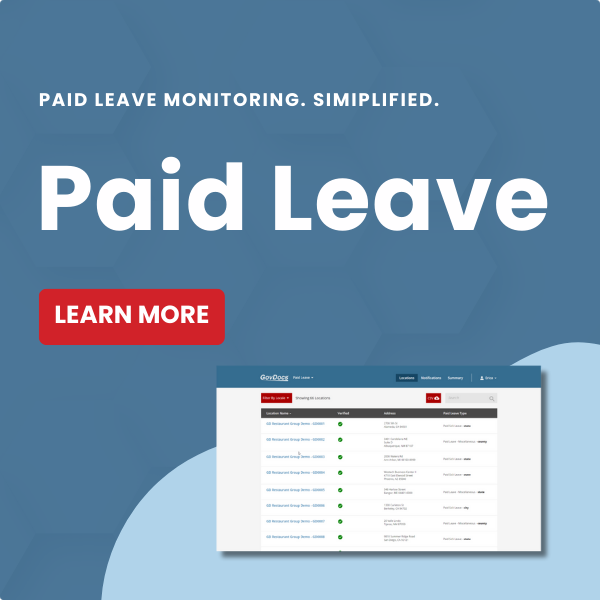
For those employers struggling to track and stay up to date with the ever-changing paid leave landscape in the Midwest and the rest of the United States, check out GovDocs Paid Leave.

This Employment Law News blog is intended for market awareness only, it is not to be used for legal advice or counsel.
Who is GovDocs?
GovDocs simplifies employment law compliance for large employers in the U.S. and Canada. The GovDocs software platform integrates three solutions in one convenient place to help you master the employment laws impacting your business. Whether you manage a labor law posters, minimum wage or paid leave program, our products cut through research time, provide proactive insights into the everchanging landscape of employment laws and reduce the risk of noncompliance. The company is headquartered in Eagan, Minn.
The GovDocs Poster Store simplifies posting compliance for employers with less than 30 locations across all industries, offering a variety of posting products to meet your labor law compliance needs.

